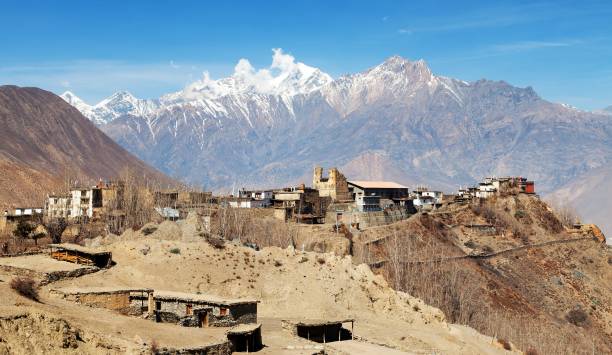
Walk into any village in northern Mustang and it feels as though the clock stopped a few centuries ago. Sheltered behind the Annapurna range, this dry valley kept its Tibetan Buddhist way of life almost intact. There are no big towns here and very little noise. Instead you get mud-walled houses, prayer flags snapping in the wind and monks who still follow routines their predecessors kept hundreds of years ago.
If culture is the main reason you are going, an Upper Mustang tour with a knowledgeable local guide makes a real difference. A good guide explains what the paintings in a monastery mean, tells you the history behind a ruined fort, and knows which villagers will happily share a cup of butter tea with you.
Lo Manthang, the Walled City
The heart of the region is Lo Manthang, a walled town founded in the 14th century. Inside the walls you will find the old royal palace, narrow lanes and several large temples. The town was the seat of the Lo kings for centuries, and the royal family still holds a respected place in local life. Give yourself at least two nights here. There is more to see than a single afternoon allows.
Monasteries Worth Visiting
The monasteries are the main reason many visitors come. Three stand out:
- Jampa Lhakhang: A temple of Maitreya, the future Buddha, with large clay statues and detailed wall mandalas.
- Thupchen Gompa: A big 15th-century assembly hall held up by tall wooden pillars.
- Luri Gompa: A small cave monastery with rare murals and old stupas.
Inside, lighting is dim, so a small torch helps you see the paintings properly. Always check with your guide before taking photos, since many shrines do not allow them.
The Sky Caves
The cliffs around the valley are full of man-made caves, some of them perched high on near-vertical walls. Nobody is completely sure why they were built. Researchers believe they served as homes, burial chambers and meditation retreats at different times. The Chhoser caves near the trail are the easiest to reach, and a few of them have several levels connected by narrow passages. Wear shoes with a good grip if you plan to climb.
Festivals and Everyday Rituals
If your dates are flexible, plan around a festival. Tiji is a three-day spring ceremony in Lo Manthang with masked monk dances that act out the victory of good over evil. Yartung, held in late summer, brings horse races and celebrations after the harvest. Even without a festival, you will see people turning prayer wheels, burning juniper and tying new prayer flags in the early morning.
Food on the Trail
Teahouse meals are simple and filling. Expect Tibetan bread, thukpa noodle soup, buckwheat pancakes and plenty of salty butter tea, which takes a little getting used to. Apples and apple products from the Marpha area are a nice treat on the way back.
Conclusion
What makes this region special is how alive its culture still is. The monasteries are in use, the festivals are real, and the villages are lived in rather than staged for visitors. Take time in Lo Manthang, ask questions, go slowly and treat sacred places with respect. You will come home with a much better understanding of how life has been lived in this corner of the Himalayas for centuries.
