Freight is a business of small margins. A pallet measured a few inches short on the dock can turn into a surprise charge a month later, and a slow receiving process can leave trucks waiting and drivers frustrated. Most logistics managers have seen both problems more often than they’d like.
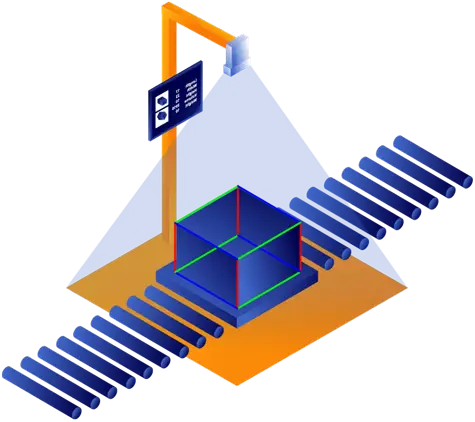
A pallet dimensioner fixes a lot of this at the source. It captures size, weight and photos of each pallet before it leaves your floor, so you’re working with real numbers instead of estimates.
Getting Your Billing Right
Carriers don’t charge on weight alone. They use dimensional weight, which means the space your shipment takes up in the truck matters as much as what it weighs. When someone measures a pallet by hand with a tape, small errors creep in, and those errors add up fast across hundreds of pallets. The result is dimensional backcharges that quietly eat into your margins.
With an automated scanner, every pallet is measured the same way, every time. What you bill matches what the shipment really occupies, and the invoice surprises mostly disappear.
Avoiding Carrier Penalties
Most carriers re-measure freight at their sorting hubs using automated equipment. If your dock team recorded a smaller size than the carrier’s system finds, you get hit with reweigh fees, dimensional surcharges and handling penalties.
A dimensioner on your own dock records exact cubic dimensions before the pallet is loaded. When the carrier audits it later, the numbers line up, and there’s very little left to dispute.
Protecting Your Freight Revenue
Underbilling is one of those problems that rarely gets noticed. If a pallet is recorded smaller than it really is, you charge your customer less than you should, and you absorb the difference without ever seeing it on a report.
Cargo Spectre dimensioning systems capture your freight data in a few seconds, right on the warehouse floor. Every pallet gets measured properly, so you stop losing money on shipments that were billed too low.
Faster, Easier Work on the Dock
The financial side gets most of the attention, but the day-to-day benefits matter just as much. Forklift operators can complete a scan without climbing out of their seat. That saves time, saves energy, and keeps the dock moving instead of backing up around a manual measuring station.
When receiving and staging go faster, the same team can handle more freight without adding headcount.
What Changes on the Floor
- Weight, volume and photos are captured in under three seconds per pallet.
- Less manual measuring means less fatigue and fewer dock accidents.
- Trucks turn around faster, which helps cut detention charges at your loading bays.
- Digital records feed straight into inventory updates and shipping manifests.
- Every distribution and fulfillment site follows the same measuring routine.
Photo Proof That Backs You Up
Each scan includes a clear photo of the pallet, taken at the moment it’s measured. That small detail ends up being very useful.
- You have proof of the cargo’s condition before it goes to the carrier, so damage that already existed can’t be blamed on you.
- Photos are stored next to the measurements in a secure cloud system, so anyone on your team can pull them up.
- When a dispute comes up with a carrier, you can settle it quickly with visual evidence instead of arguing over paperwork.
Conclusion
A pallet dimensioner pays off in three places: your billing, your dock speed, and your customer disputes. You get accurate spatial data on every shipment, fewer arguments with carriers, and a smoother flow through the dock. With a cloud-connected system, your shipping operation stays efficient and profitable as your volumes grow.
Frequently Asked Questions
Why does photo documentation matter during freight scanning?
A photo shows exactly how the cargo looked when it was received or dispatched. If a carrier claims damage or adds a surcharge you don’t agree with, you have clear evidence to push back.
Can a dimensioner keep up with a busy warehouse?
Yes. A full scan takes only a few seconds, so it works well in high-volume hubs that handle thousands of pieces a day.
